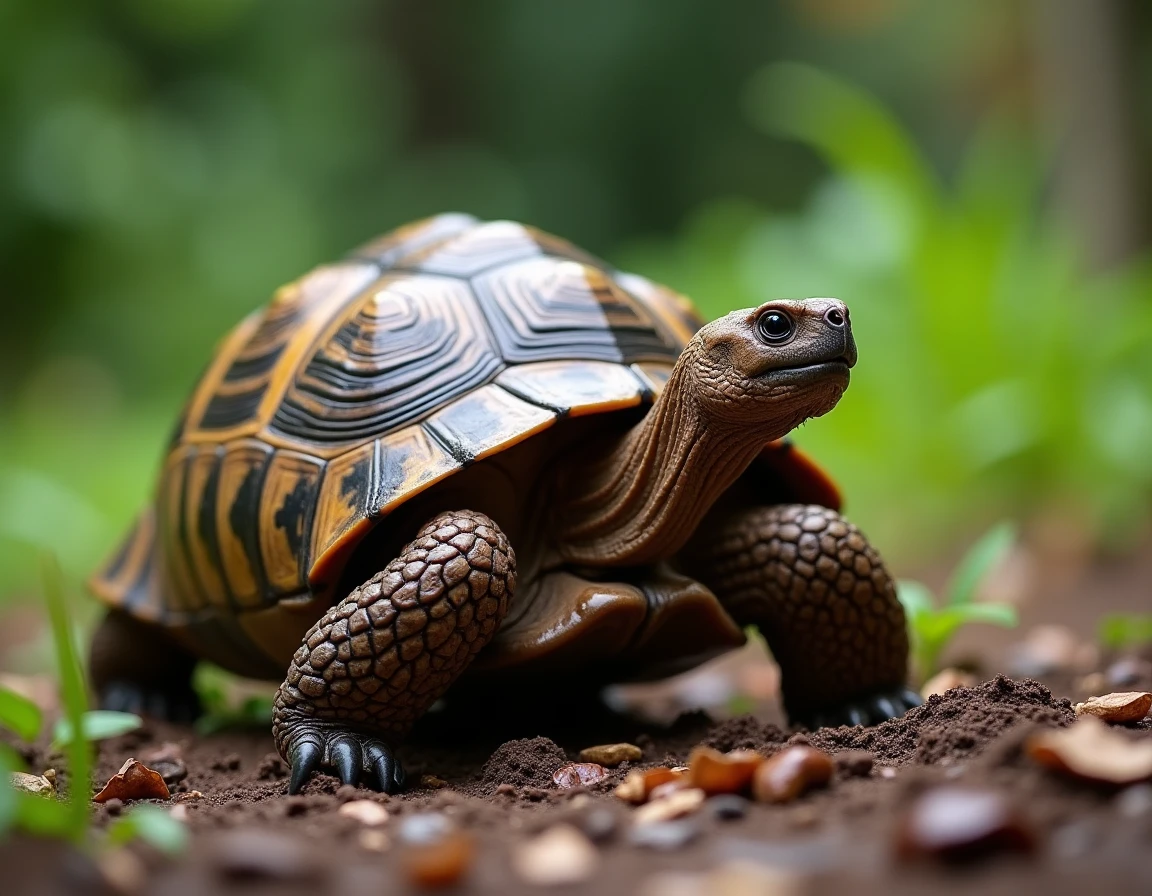
Mediterranean tortoises (Hermann, Graeca, Marginata) naturally live outdoors, exposed to the elements for a good part of the year. Rain is part of their normal environment. The problem rarely comes from the water falling from the sky, but from what happens on the ground when it accumulates.
Enclosure drainage and standing water: the real danger for a tortoise
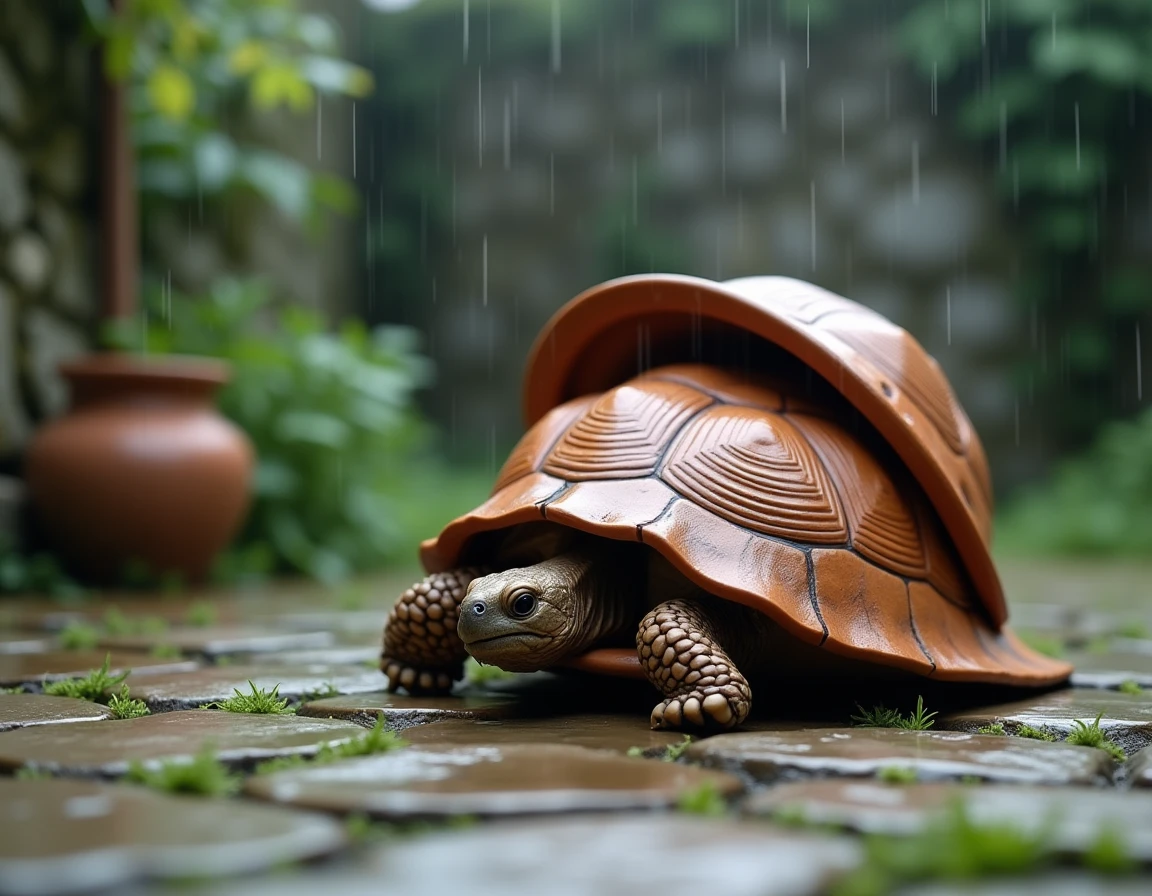
A passing shower does not endanger a healthy tortoise. What puts it at risk is an enclosure where water stands after rain. Clay soil, a natural depression in the terrain, or overly compact substrate prevent water from draining. The tortoise then finds itself in a permanently damp area, with its legs and shell in contact with soaked ground for hours.
This residual moisture promotes the development of fungi on the shell and soft parts. It can also lead to respiratory infections if the tortoise remains in the cold and damp without being able to warm up. The danger is not the rain that falls, but the water that remains.
To find out if tortoises like rain on British & Co, one must distinguish between a brief shower, which often stimulates the animal’s activity, and prolonged runoff that turns the enclosure into a pond.
Properly setting up an enclosure requires checking one simple point: after heavy rain, water should disappear from the ground in less than an hour. A draining substrate (a mix of topsoil and coarse sand), a slight natural slope, and one or two raised shelters are usually sufficient to resolve most situations.
Rain and hydration: a natural resource for Hermann’s tortoises
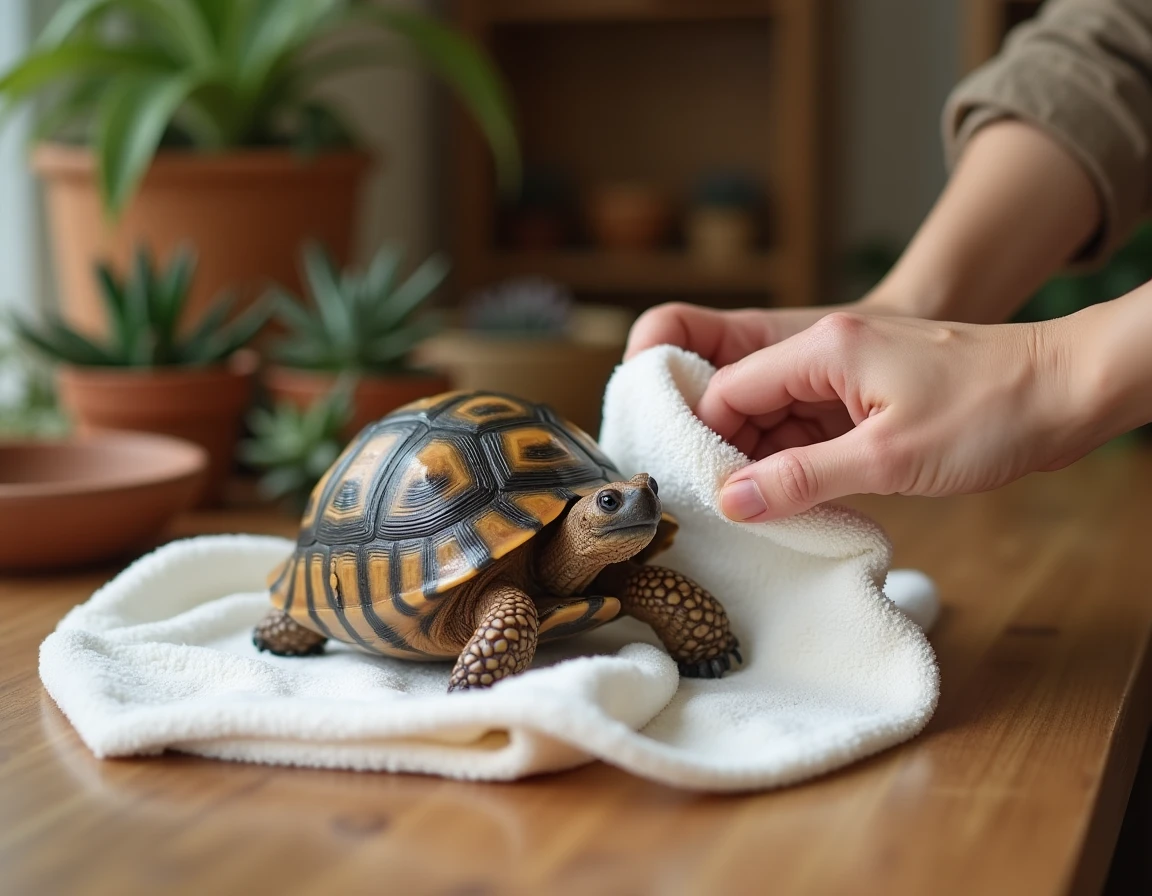
Tortoises drink little, but they do drink. In captivity, the water bowl remains the main means of hydrating them. Rain plays a complementary role that many owners underestimate.
During a shower, Hermann’s tortoises frequently come out of their shelter instead of seeking refuge. This behavior, well documented by breeders and discussions among owners, can be explained by several mechanisms:
- The rain moistens the ground and facilitates the consumption of fresh vegetation, which is richer in water than dry plants in the middle of summer.
- The droplets running off the shell and the ground allow the tortoise to drink directly, sometimes adopting a characteristic posture with its head lowered towards the ground.
- The ambient humidity helps maintain skin hydration, particularly in juveniles whose shells are not yet fully ossified.
In other words, moderate rain in mild weather is beneficial for the tortoise’s hydration. The owner has no reason to bring the animal inside at the first drop. The only relevant precaution concerns the outside temperature at the time of the shower.
Cold rain and tortoise: the temperature threshold to watch
The determining factor is not the amount of water, but the combination of cold and humidity. Mediterranean tortoises are ectothermic: their body temperature depends on their environment. When rain is accompanied by a drop in temperature, the animal’s metabolism slows down. The tortoise becomes less reactive, less able to move to a shelter, and more vulnerable.
Below a certain temperature threshold, a wet tortoise can no longer warm itself. The main risk is respiratory infection, which manifests as nasal discharge, noisy breathing, or abnormal lethargy. These symptoms require prompt veterinary consultation.
When to intervene during a rainy episode
The practical rule is simple. In mild weather (late spring, summer), leaving the tortoise in the rain poses no problem as long as it has accessible shelter. In cool weather (early spring, autumn), a prolonged shower justifies checking that the animal has taken cover.
In autumn, vigilance increases. Tortoises preparing for hibernation reduce their feeding and activity. Cold rain on a tortoise in pre-hibernation can deplete its reserves if temperature fluctuations reactivate it without the ability to eat. This phenomenon, described by specialized veterinarians, is one of the most frequent risks during seasonal transition periods.
Setting up an effective rain shelter in a tortoise enclosure
The rain shelter does not need to be sophisticated, but it must fulfill three functions: protect from direct runoff, remain ventilated to avoid condensation, and be accessible at all times.
- An upside-down tile placed on blocks or a small untreated wooden hut, open on one side, provides sufficient shelter for an adult tortoise.
- The ground under the shelter should remain dry: a bed of hay or dead leaves absorbs residual moisture and offers an insulating substrate.
- The entrance of the shelter should be oriented away from prevailing winds to limit the entry of driving rain.
- For juveniles, a more enclosed shelter with a single opening reduces the risk of rapid cooling.
In winter, when the tortoise hibernates buried, a tarp placed above the hibernation area (without direct contact with the ground) protects the animal from infiltration. Flooding of the hibernation site remains the most serious risk related to rain: a buried and inactive tortoise can drown if the water level rises in the substrate.
Rain, for a healthy tortoise in a well-designed enclosure, is more of an ally than a threat. The only parameter that turns an ordinary shower into a risky situation is soil that retains water or cold that prevents the animal from regulating its temperature. Checking the drainage of the enclosure after each heavy rain and maintaining accessible dry shelters covers almost all problematic situations.