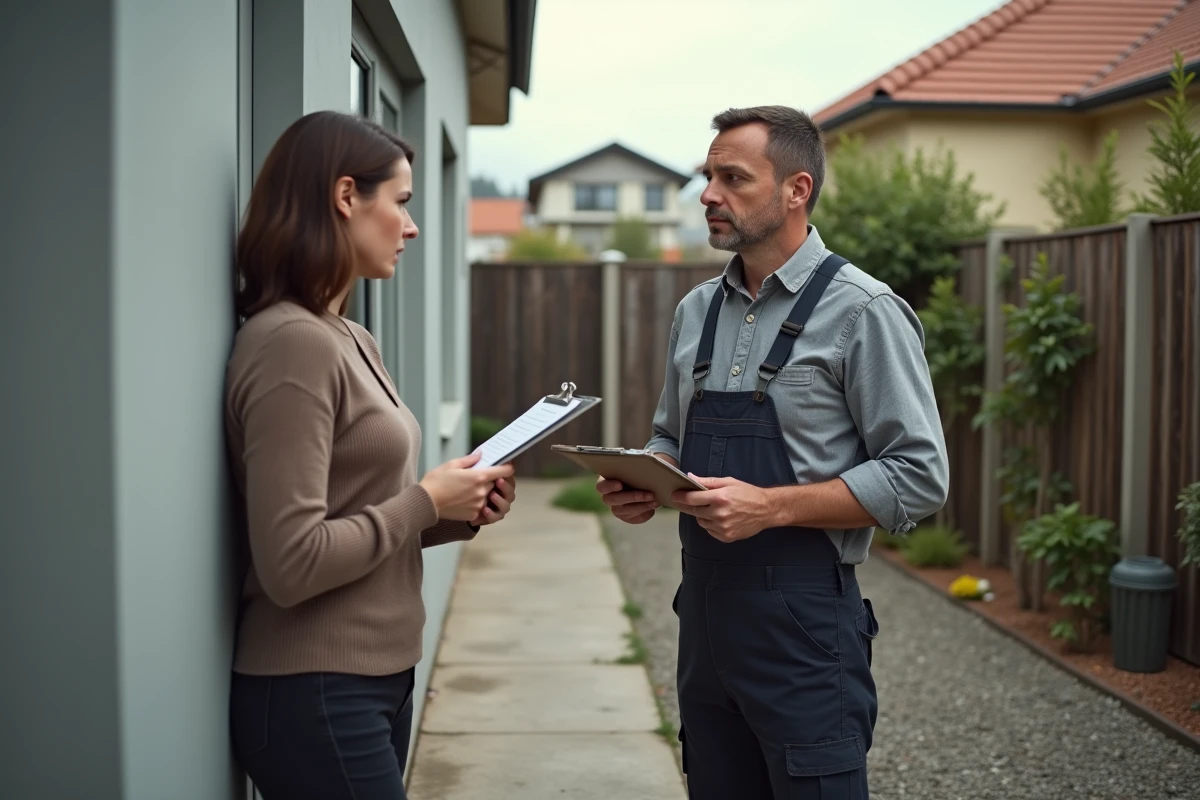
A tar paving project on your home’s plot, even for a few square meters, can quickly become a necessary passage through local administrative mazes. Imagining that you will simply transform your yard sometimes borders on fantasy: in certain areas, even the smallest project encounters a tight grid of rules dictated by the local urban planning plan. A neglected formality, and you risk having to start all over again… with costs involved.
Between the targeted surface area, the location of the house, and the precise nature of the work, nothing is really standard. Sometimes, it is enough to notify the town hall via a declaration, especially outside major cities or if the yard is in a protected area. Other times, you will be asked for a well-prepared file. Regulations are almost case-by-case; it is impossible to rely solely on the neighbor’s experience.
Understanding the rules before paving a yard
Improving your yard is not just about choosing a surface material or considering the price. Behind every project, the local urban planning plan (PLU) of the municipality imposes its own limits. Some materials are simply prohibited, the ground must sometimes remain partially permeable, and the slope of the land proves decisive for managing rainwater. Choose asphalt or a two-layer system? The town hall leaves nothing to chance, and every file is scrutinized against these technical requirements.
The more ambitious the project, the more extensive the procedures. Covering a small concrete slab with a bituminous surface is nothing like completely paving a sloped yard. In most cases, a prior declaration is required as soon as certain surface areas are exceeded. And if the property is located near a classified site, the file will be even more closely monitored. The best strategy is to contact the urban planning department early: obtaining their green light means avoiding the specter of penalties and preventing the need to cancel work mid-project.
Modifying the permeability of the soil also weighs in the balance. Excessive waterproofing can cause uncontrolled runoff, which is why you may sometimes be asked to compensate with draining solutions elsewhere on the plot. To delve into all these subtleties and anticipate the steps, a useful reflex remains to consult the Maisons Euro France website before tackling the administrative side.
The procedures and permits to obtain from the town hall
Want to transform your yard? Before starting work, you must go through the town hall. Even for a small area, validation by the urban planning department is key to ensuring the project can proceed legally.
Often, as soon as the modified surface exceeds 5 m² or the appearance of the land changes, submitting a prior declaration is required. To submit this file, you will generally need to provide the following documents:
- a location plan to precisely locate the site on the municipality
- a site plan that clearly delineates the area to be paved
- a descriptive notice explaining in detail the work and the choice of material
In the perimeters of historical monuments or heritage protection, the opinion of the architect of the buildings of France may sometimes be added to the equation. When the yard opens onto public space, a road permission is even required. Forgetting any of these steps exposes you to penalties: fines, orders to restore the site, or even suspension of work in case of municipal inspection.
Each declaration engages the responsibility of the owner. Neglecting this formality can lead to complaints from neighbors or lengthy resolution blocks. Before submitting your file, carefully check that your project meets the town hall’s expectations. A clear response means avoiding unpleasant surprises and ensuring a smooth project.

Cost, constraints, and tips before starting work
The total cost of paving will depend on the number of square meters to be treated, the nature of the subsoil, and the material used. There are many variations: cold or hot asphalt, two-layer systems, resin… each solution has its own lifespan, aesthetics, and price. It is better to request a quote from a professional in earthworks or an experienced company to avoid unpleasant surprises.
The preparation of the ground should not be underestimated. A poorly compacted or uneven base compromises the whole project: cracks, water stagnation, flatness defects… PLU regulations often impose a slope to control water flow, which requires methodical execution from the earthworks stage.
Some owners prefer to opt for alternatives: concrete slabs, permeable pavers, or resin coatings. These more permeable solutions facilitate water management and integrate well into green spaces or on a modern terrace.
The final bill will also depend on the configuration of the land, the accessibility of the site, and even the weather at the time of installation. The intervention may involve several trades and must therefore be well anticipated. A detail that makes a difference: planning each step helps avoid unexpected costs and last-minute blocks.
In the end, paving your yard is much more about reflection than simply applying a black surface. It is the mastery of the project that guarantees peace of mind for the years to come, far from administrative hassles, on an exterior that fears neither rain nor summons to the town hall.