
Choosing comfortable holiday accommodation means checking the practical details before booking. Photos and listing descriptions are not always enough to guarantee an enjoyable stay. From thermal comfort and payment security to the property’s actual accessibility, several points deserve careful attention to avoid disappointment on arrival.
Check that a holiday rental listing is trustworthy
You’ve found an attractive property on a booking platform. The photos look polished, and the description promises all the comforts you need. But how can you tell whether the listing reflects reality?
Start by checking the host’s identity and cancellation policy. A reliable owner has a complete profile, answers questions, and offers clear terms. Reputable platforms provide traceable payment methods, which offer protection in the event of a dispute.
A ruling by the Paris Judicial Court, issued on 10 June 2025 and published by the Court of Cassation, reminds us that a listing’s reliability cannot be inferred from the platform’s promises alone. Carefully reading the booking terms remains the best precaution before paying.
To compare accommodation and narrow down your search, resources such as https://www.lamaisonduvoyageur.com bring together a range of options for different types of travellers.
Online reviews are another useful way to screen listings. Prioritise recent comments that mention specific details, such as the condition of the bedding, cleanliness, or noise. If a property has plenty of reviews but none mention heating or air conditioning, ask the owner directly.

Thermal comfort and the property’s energy performance
The temperature inside your accommodation can make or break your stay. Too hot in summer or too cold in winter, this factor is often overlooked when booking.
Law No. 2024-1039 of 19 November 2024, known as the Le Meur Law, introduces energy performance requirements for certain furnished tourist accommodation. The deadlines are being phased in and vary depending on the property’s location. Asking about insulation, heating, and air conditioning before booking can help you avoid unpleasant surprises.
Here’s what you can check:
- The type of heating (electric, gas, or heat pump) and whether its capacity is suitable for the size of the property
- Whether there is air conditioning, especially if you’re staying in the south of France during summer
- The condition of the insulation (single or double glazing, shutters, and the orientation of the rooms)
If the owner can’t answer these questions, take it as a warning sign. Well-insulated accommodation will usually highlight its features.
Ask the owner the right questions
Be specific. Instead of asking, “Is the property well heated?”, ask about the average temperature in winter or the type of heating system installed. A transparent owner answers with facts, not adjectives.
How accessible is the holiday accommodation in practice?
A property described as “accessible” may not suit everyone with a disability. The national Tourisme & Handicap label covers four categories: physical, visual, hearing, and intellectual disabilities. Accommodation may be certified for one or more of these categories without meeting the needs of all guests.
Asking for photos of the entrances and key measurements (door widths, bathroom fixture heights, and whether there is a lift) is the most reliable approach. Needs vary from person to person, and a “wheelchair accessible” label doesn’t provide practical details.
Check the immediate surroundings too. An accessible property with an unmentioned outdoor staircase, or a distant car park without an accessible route, can pose a real problem. Listing photos rarely show the exterior from this perspective.
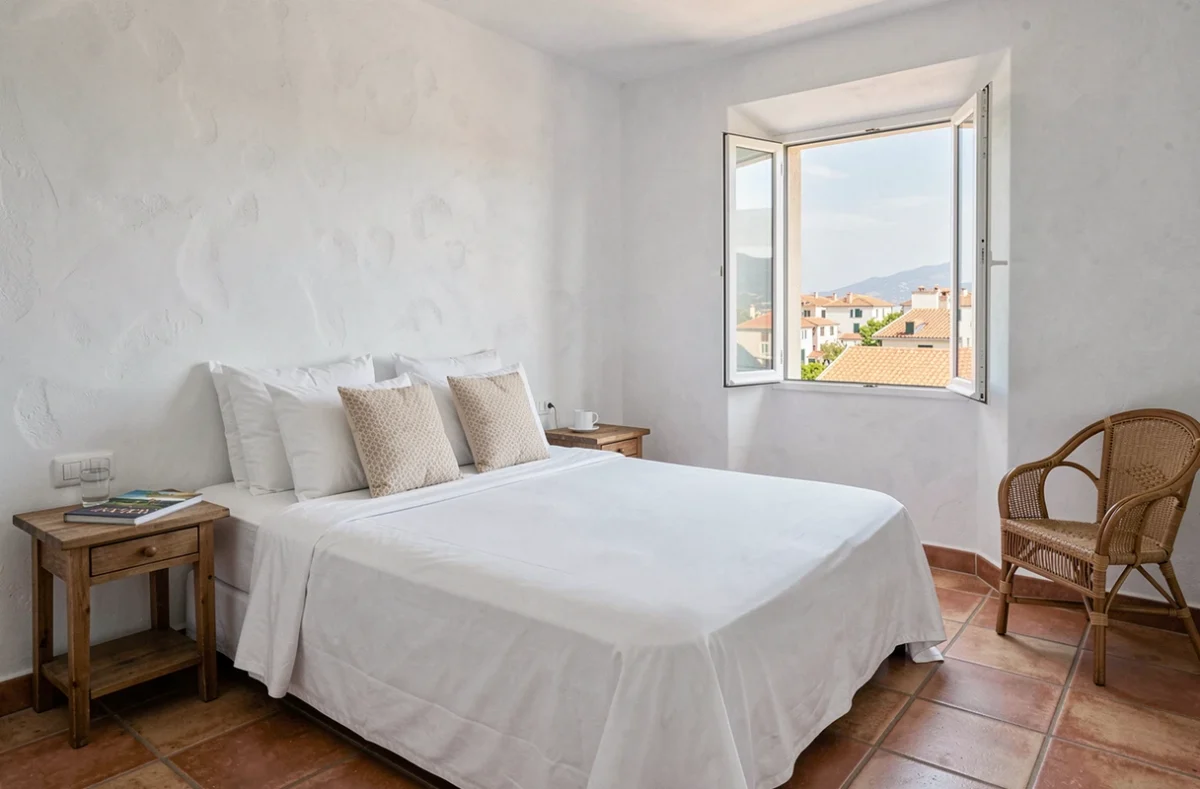
Quality labels and indicators for a successful stay
With holiday rentals multiplying, quality labels provide objective benchmarks. They don’t guarantee that the accommodation will suit your tastes, but they do show that it meets verified criteria.
The Clef Verte label, for example, assesses criteria relating to water, energy, and waste management, as well as guest awareness. The label is renewed annually, requiring operators to maintain their commitments over time.
Before making your final choice, check the following:
- Whether the property has an official label (Tourisme & Handicap, Clef Verte, or a star rating) and whether it is still valid
- Whether the listing complies with local registration rules, which the Le Meur Law has strengthened for furnished tourist accommodation
- Whether the advertised price matches the services described (an unusually low rate for a property presented as high-end warrants caution)
Local regulations and accommodation availability
Law No. 2024-1039 of 19 November 2024 gives municipalities more tools to regulate furnished tourist accommodation. Registration requirements, changes of use, and permitted rental periods vary from one municipality to another. Checking that the listing complies with applicable local requirements can help protect you from a last-minute cancellation because the property is non-compliant.
Comfortable holiday accommodation is about more than a great photo and a good price. The quality of your stay depends on the practical details you check before clicking “book”: thermal comfort, genuine accessibility, the owner’s identity, and regulatory compliance. Every question you ask in advance is one less disappointment when you arrive.