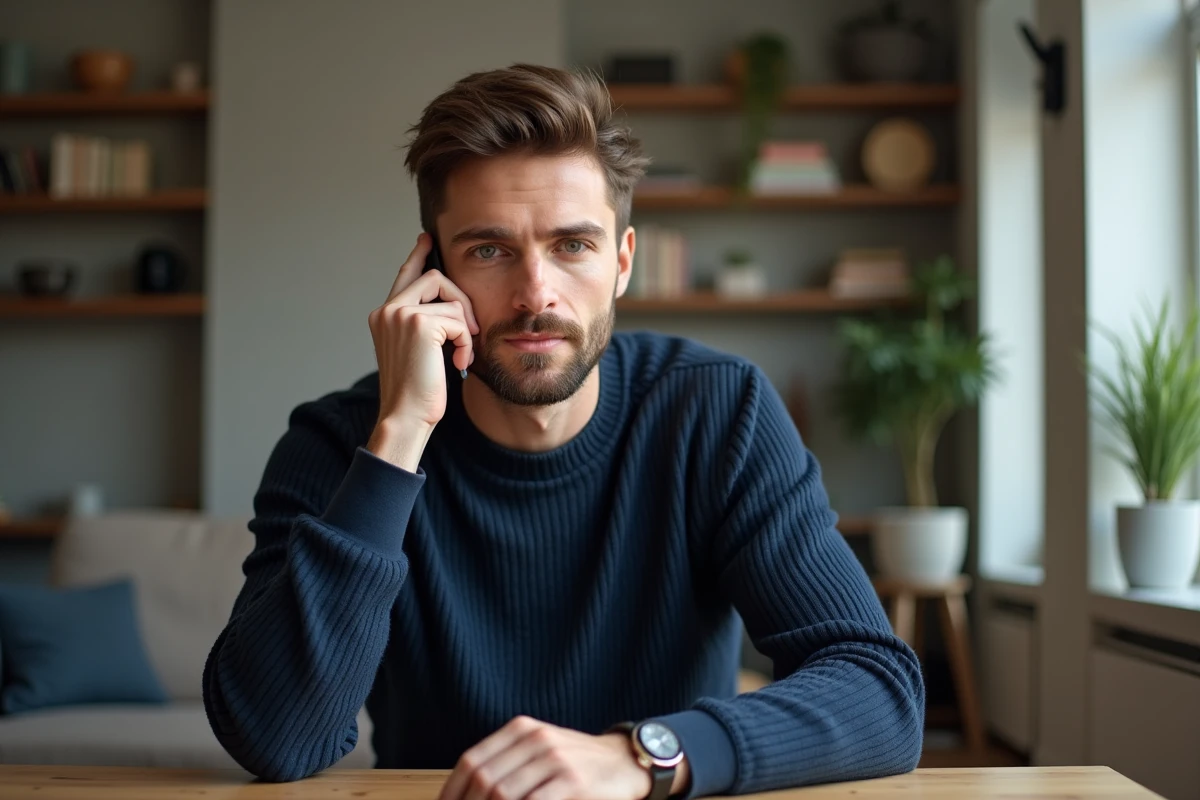
The number masking feature remains active on most mobile networks, despite increasingly stringent traceability protocols enforced by operators. The use of this feature generates variable conditions depending on devices, operating systems, and service contracts.
Some countries or providers impose unexpected restrictions, while a few third-party applications promise additional options, often at the cost of unknown compromises on privacy. Blocking or reverse identification devices continue to evolve, constantly altering the actual scope of telephone anonymity.
Why want to make anonymous calls? Privacy, security, and common uses
The masked number goes beyond a simple technical trick. It addresses a very real concern: the need to maintain control over one’s own private life. In an era of intensified surveillance, being able to make an anonymous call offers concrete protection of communications and reduces exposure to solicitation and harassment. From discreet individuals to professionals keen on compartmentalizing their identities, not to mention engaged associations or citizens, many find in this device a way to limit the spread of their data.
Using a masked number acts as a barrier. It prevents the automatic collection of numbers and hinders the creation of files without any consent. For the person receiving the call, there is no possibility to retrieve or sell the number. But nothing is perfect: some recipients systematically reject anonymous calls, equipped with applications or functions that filter these communications or even block them outright.
The legal framework is in place. Masking one’s number is allowed to protect one’s privacy, but traceability remains accessible to authorities if needed. The law regulates usage, prohibits harassment and threats. Emergency numbers, for their part, do not accept anonymous calls to ensure the safety of interventions.
To delve deeper into these issues, the service https://www.onsappelle.fr/ On s’appelle – The site where we say it all! highlights the diversity of needs and reminds everyone of their rights and responsibilities regarding telephone confidentiality.
Masking your number on Android, iPhone, or via the operator: simple methods explained
To mask your number, three methods prevail: modify smartphone settings, use a temporary code, or request the operator to activate the feature. On Android, simply open the call settings and activate the “Hide my number” option. Each outgoing call will then display as “private number” to your contact. On iPhone, the same logic applies: go to “Settings,” then “Phone,” and then “Show My Caller ID,” which can be disabled with a gesture.
For occasional use, the code #31# before the recipient’s number does the trick. A concrete example: dial #31# followed by the number, then call. On some landlines, other variants exist, such as 31# or 67, depending on the network used.
If you want to mask all outgoing calls, you can request your operator to activate the permanent secrecy service. Each provider has its own procedures, accessible via the customer area or dedicated service. Activation is often quick and sometimes reversible upon simple request.
Here’s a summary of the available methods and their usage:
| Method | Usage |
|---|---|
| Android/iPhone Settings | Permanent masking for all calls |
| Code #31# | Occasional masking for a specific call |
| Operator | Activation of permanent masking on request |
The number masking protects your privacy while allowing you to use your phone as usual, without risking the involuntary transmission of personal data.
What you need to know before calling with a masked number: limits, legal framework, and tips for protecting your privacy
Masking your number addresses both the desire to preserve your privacy and the need to defend your personal life. However, this practice does not exempt one from rules. On emergency services, police, ambulance, firefighters, 112, masking is simply impossible. On these lines, caller identification remains automatic to ensure the safety of interventions.
Traceability remains relevant: even if invisible to your interlocutor, your number is recorded by the operator. Judicial authorities can access it in case of an investigation. Using the masked number for harassment or threats exposes one to prosecution. Usage must remain reasonable, within the limits set by law and ethics.
Called parties also have means to protect themselves. Many activate the blocking of anonymous calls. In practice, a masked call is often rejected or ignored, whether by individuals, businesses, or administrations wishing to limit unwanted solicitations.
To better understand the key points, here are the main takeaways regarding the masked number:
- Telephone anonymity serves to preserve privacy, but it never withstands a judicial investigation.
- Abusing masking eventually raises suspicion and may prevent your calls from going through.
- Respecting regulations remains the best guarantee to protect one’s identity without exposing oneself to prosecution.
Masking your number is not about disappearing: it’s about choosing what to share, with whom, and under what circumstances. Anonymity, today, is tested against reality, a tool to be handled with discernment, neither an illusion nor a panacea.