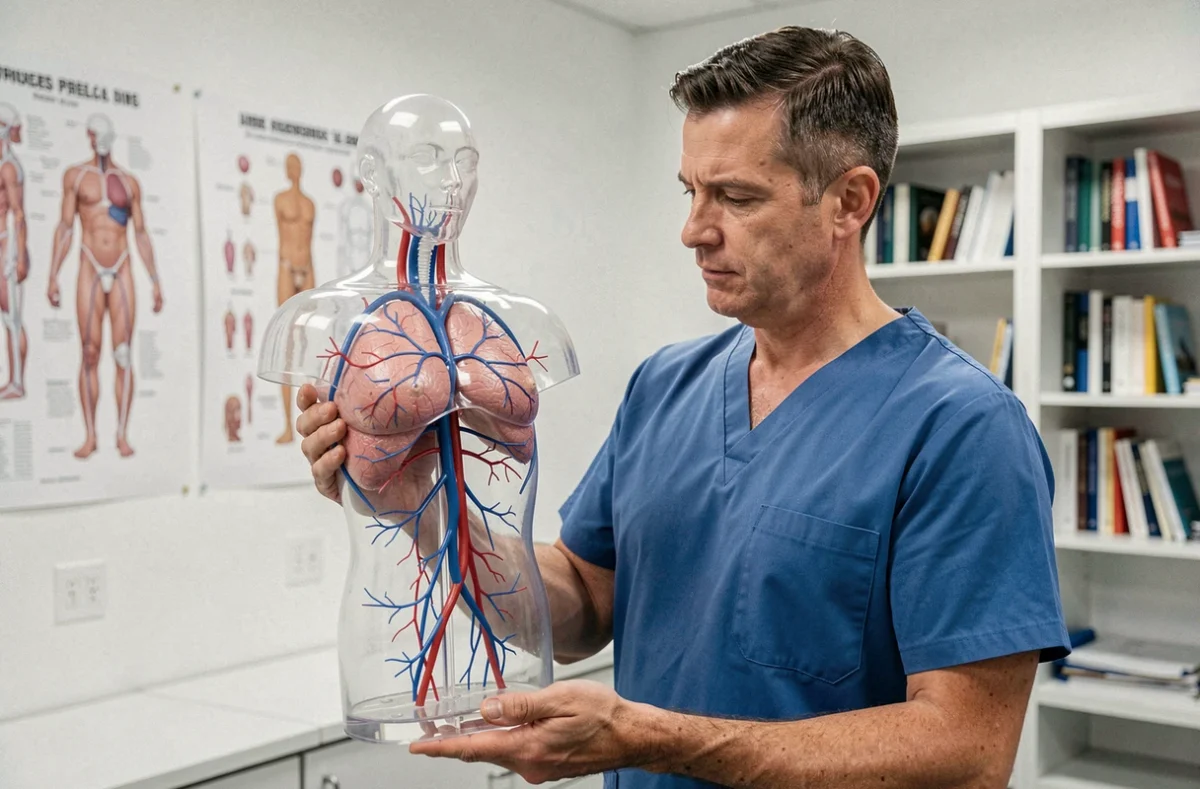
Anatomical vocabulary is full of terms beginning with the letter V, most of which refer to structures involved in blood circulation. Vessels, veins, venules, ventricles: these words describe a network whose logic is based on the flow of blood between the heart and the tissues. Understanding this network gives each term meaning instead of simply lining them up in a list.
Venules and capillaries: where the blood changes direction
After leaving the capillaries, having delivered oxygen and nutrients to the tissues, blood enters tiny vessels called venules. These structures mark the turning point between circulation to the tissues and the return journey to the heart.
Capillaries, located just upstream, are the main site of exchange between the blood and the cells. Their very thin walls facilitate the passage of gases, nutrients, and waste products. Not all capillaries are built the same way: continuous, fenestrated, and sinusoidal capillaries have different levels of permeability, suited to the needs of the kidneys, intestines, or liver.
Venules therefore collect blood that is low in oxygen and laden with metabolic waste. When looking for a body part beginning with V, the venule is rarely the first one mentioned, even though it plays a transitional role between tissue exchange and the venous system proper.
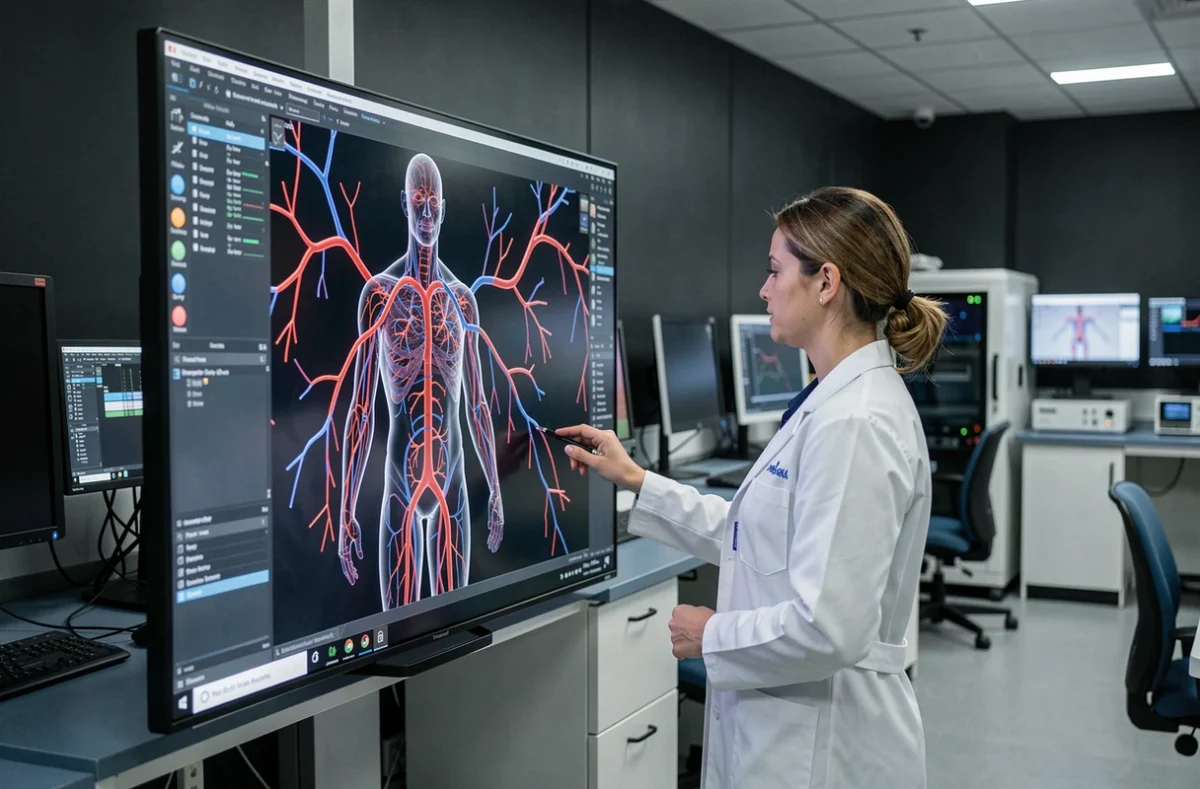
Veins and valves: the return route to the heart
Venules converge to form veins of increasing diameter. Blood gradually flows back to the large venae cavae, which empty into the heart’s right atrium.
This venous return poses a mechanical challenge, especially in the lower limbs. Gravity works against the upward flow of blood. The veins in the legs contain valves, internal folds that prevent backflow. When these valves do not work properly, blood pools and the veins dilate, which can lead to varicose veins (another V word, incidentally).
The word “vein” itself covers a diverse range of structures. The hepatic portal vein carries nutrient-rich blood from the intestines to the liver. The pulmonary veins, on the other hand, return oxygenated blood from the lungs to the heart. The name “vein” indicates the direction of flow toward the heart, not the blood’s oxygen content.
Ventricles of the heart and brain: two meanings for the same word
The term ventricle refers to a cavity, but its meaning changes depending on the organ in question.
Heart ventricles
The heart has two ventricles. The right ventricle pumps blood to the lungs through the pulmonary arteries. The left ventricle sends it throughout the body via the aorta. These two chambers power the circulatory system.
The heart valves (aortic, pulmonary, mitral, and tricuspid) prevent blood from flowing back between the chambers. Their dysfunction can lead to heart murmurs or insufficiency.
Brain ventricles
The brain also contains ventricles, but they do not carry blood. They are filled with cerebrospinal fluid, which protects the central nervous system and helps remove metabolic waste from the brain. The vermis, the central part of the cerebellum, lies near the fourth ventricle.

Other body parts beginning with V: from the bladder to the vomer
Beyond the circulatory system, the letter V covers a wide variety of structures. Here are the main ones, grouped by system:
- Bladder: a hollow organ that stores urine produced by the kidneys before it is expelled. The term “vesical” describes anything related to the bladder.
- Gallbladder: a small reservoir beneath the liver that concentrates bile, which is used to digest fats in the small intestine.
- Vertebrae: the stacked bones of the spine, divided into cervical, thoracic, lumbar, sacral, and coccygeal vertebrae. The adjective “vertebral” describes anything related to this structure.
- Vomer: a thin, flat bone that forms the posterior and inferior part of the nasal septum.
- Soft palate: the soft part at the back of the roof of the mouth, involved in swallowing and speech.
- Face: the front of the head, including the eyes, nose, mouth, and underlying bony structures.
Other less common terms are also worth mentioning. Intestinal villi are small projections that increase the absorptive surface area of the small intestine. Vibrissae are the hairs inside the nostrils that filter inhaled particles. The vagina, abdomen, vulva, and penis round out the list of anatomical organs and regions beginning with V.
Vascularization: the word that connects all blood vessels
The term “vascularization” describes the entire network of blood vessels supplying an organ or tissue. It encompasses arteries, arterioles, capillaries, venules, and veins in a single concept.
Arterioles, located between the arteries and capillaries, help regulate the amount of blood entering the capillary networks. They can contract or dilate, thereby changing local blood flow. This mechanism explains why certain organs receive more blood at a given time (the muscles during exercise, the digestive tract after a meal).
Blood does not flow in the same way through every type of vessel. It leaves the heart through the arteries, passes through the arterioles and then the capillaries, and returns through the venules and veins. The direction of flow relative to the heart is what defines each type of vessel, not simply its size or the composition of the blood it carries.
Pulmonary arteries, for example, carry oxygen-poor blood to the lungs. They are still arteries because they carry blood away from the heart. This distinction is key to avoiding confusion between anatomical terms beginning with V and simple interchangeable synonyms.