
Fashion and well-being share a common foundation: the relationship with the body, materials, and daily choices. For several seasons, these two worlds have converged due to new European regulations, a growing interest in second-hand items, and a reevaluation of shopping habits. Understanding these changes allows for more informed clothing choices without sacrificing the pleasure of dressing up.
Textile traceability and digital passport: what changes for the consumer
The European Union is preparing a digital passport for textile products, with the adoption of specific rules tentatively scheduled for 2027. This system will require brands to document the composition, origin of materials, and manufacturing conditions of each item. Textiles are among the priority categories of the European work plan 2025-2030.
This passport will take the form of a QR code or an embedded chip in the garment. By scanning it, the consumer will access the complete history of the product: spinning, dyeing, manufacturing, transport.
This traceability will complicate greenwashing, those vague environmental claims that the European directive on consumer empowerment aims to regulate. To follow the trends on Camille Un Point C’est Tout, this type of regulatory context also informs style choices: prioritizing a traceable item is both a fashion statement and a committed gesture.

Ban on destroying unsold goods: what consequences for collections
Since July 19, 2026, large companies can no longer destroy unsold clothing, fashion accessories, and shoes, except for exceptions provided by Delegated Regulation (EU) 2026/296. Any destruction must be accompanied by a justified declaration.
This ban alters how brands design their collections. Producing less but better becomes an economic imperative, not just a marketing argument. Excess inventory is now costly to manage, prompting brands to recalibrate their production volumes.
Several concrete consequences arise from this:
- Tighter collections, with fewer references but pieces designed to last several seasons
- An increase in private sales and regulated clearance channels, which become avenues to find quality pieces at reduced prices
- A development of repair services offered by the brands themselves, as extending the lifespan of a garment reduces the risk of unsold items
Textile circularity and repair: a fashion reflex to adopt
Textile circularity is now framed within a binding European regulatory context. Extended producer responsibility (EPR) schemes are being implemented in several member states, with eco-modulation of contributions: the more repairable and durable a garment is, the less the brand pays.
This mechanism directly influences the available offer in stores. Natural materials like linen or wool, which are easier to recycle than synthetic blends, are gaining ground in autumn-winter collections. Denim illustrates this logic well: a pure cotton jean is much easier to repair and recycle than a stretch model containing elastane.
Adopting the repair reflex in daily life
Having a jean repaired, replacing a zipper, or sewing on a button: these simple actions extend the lifespan of a garment by several seasons. Some brands now offer this service in-store or through specialized partners.
The second-hand market is experiencing strong growth in France. This trend is confirmed in both physical thrift stores and online resale platforms.
Autumn-winter style: choosing durable pieces without sacrificing look
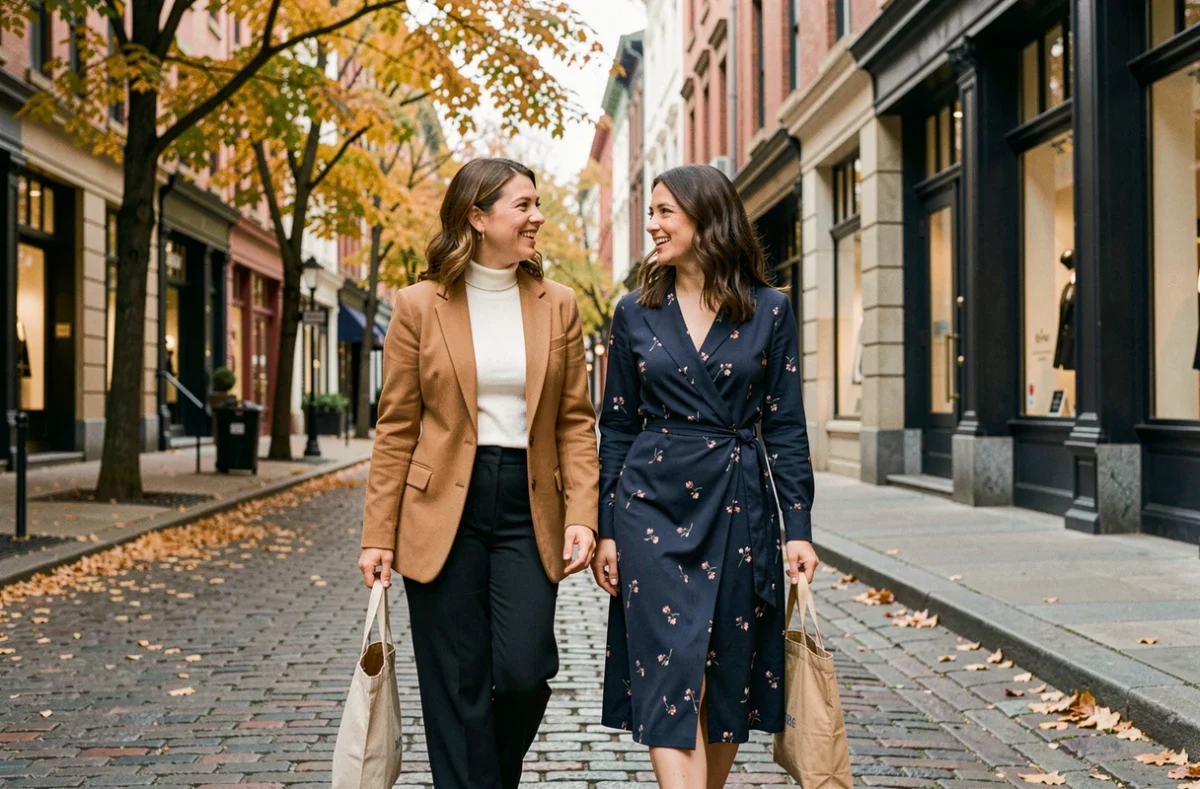
The autumn-winter season highlights reworked basics: oversized blazers, midi dresses, oversized sweaters, straight or barrel-cut jeans. These pieces can last through several seasons without looking dated, making them the foundation of a stylish yet thoughtful wardrobe.
Neutral tones (beige, brown, gray) dominate winter wardrobes, complemented by brighter color accents on accessories. This palette allows for a coherent style with a limited number of garments.
Materials to prioritize for a sustainable wardrobe
The choice of materials influences both the comfort, longevity, and recyclability of a garment. For the cold season, certain fibers deserve special attention.
- Thick linen and merino wool provide good insulation while remaining recyclable at the end of their life
- Organic cotton, grown without pesticides or synthetic fertilizers, is suitable for frequently worn pieces like t-shirts and shirts
- Vegetable-tanned leather is becoming more available in women’s and men’s collections, offering a tanning process that uses plant extracts instead of heavy metals
A wardrobe designed for well-being relies on materials that the skin tolerates well and that the environment can absorb at the end of their cycle. This perspective usefully complements the usual aesthetic criteria.
Buy less, choose better, maintain and repair: this logic takes on concrete significance with the digital passport planned for 2027, which will provide verifiable tools to confront labels with the reality of the production chain.