
Interior decoration creates a dynamic market in France, driven by DIY, reuse, and visual inspiration platforms. The content available online focuses on aesthetics: trendy colors, furniture arrangement, ambient lighting. It overlooks an entire aspect of the subject, that of the materials themselves, their impact on the air you breathe, and the regulatory constraints that now govern finishing work.
Emission labeling and indoor air quality: the forgotten criterion of decoration
Choosing paint for your living room or wall covering for a bedroom remains, in most decoration guides, a matter of shade and finish. The chemical composition of the product takes a back seat. However, paints, varnishes, glues, and wood panels release volatile organic compounds that diffuse into the room’s air for weeks after application.
In France, construction and decoration products intended for indoor use are subject to mandatory indoor air emission labeling, rated from A+ (very low emissions) to C (high emissions). This rating appears on the packaging, but few individuals check it before purchasing.
When comparing two wall paints in a DIY store, checking this label takes just a few seconds. Choosing a product rated A+ reduces the pollutant load at the source. To find project ideas compatible with this requirement, you can access the home section of Tip Top du Web, which gathers concrete ideas by room.
Ventilating during and after work remains necessary, but ventilation does not fully compensate for the choice of emitting materials. Reducing pollution sources at the time of purchase complements the air renewal ensured by a mechanical ventilation system or by opening windows.
Decorating a wall without heavy work: solutions for tenants and homeowners
Repositionable wallpaper, large wall stickers, and oversized frames allow you to transform a white wall without drilling or plastering. These options are particularly appealing to tenants, who must return the property to its original condition.
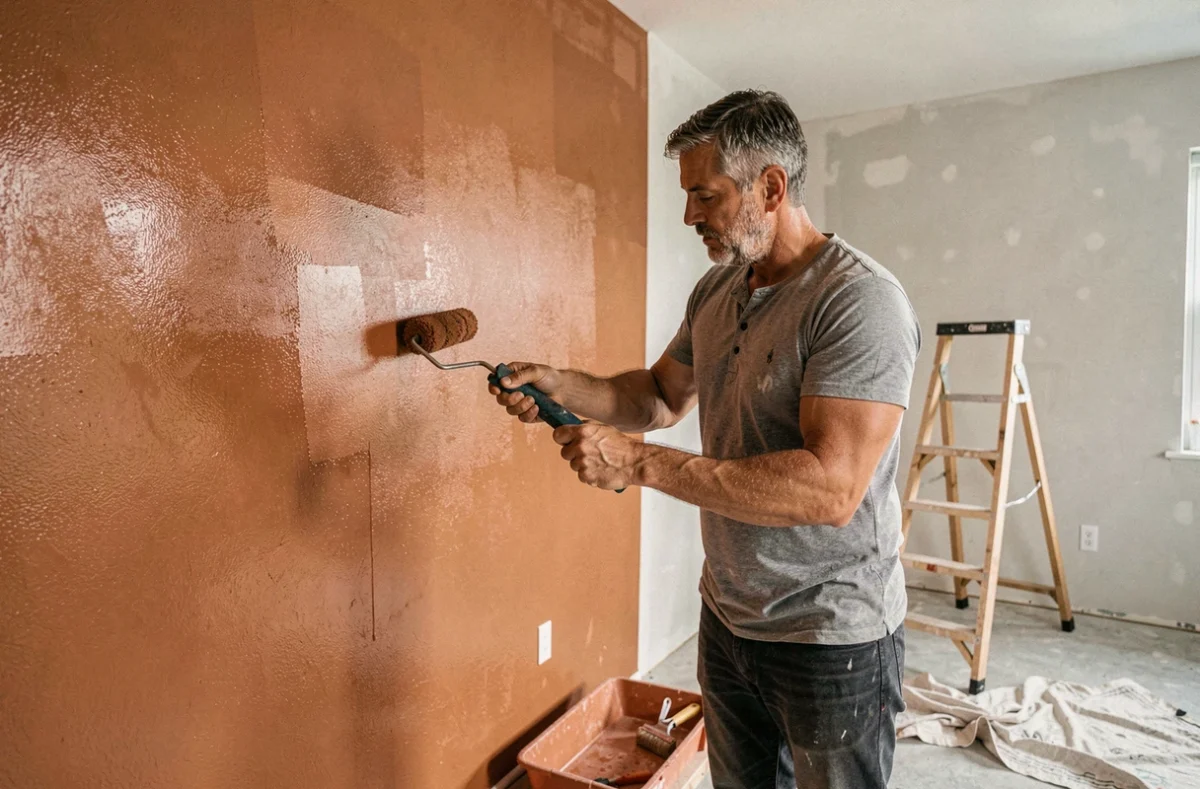
For homeowners, a wall painted in a saturated color (terracotta, sage green, duck blue) is enough to visually restructure an entire room. A single accent wall avoids monotony without requiring repainting the entire surface.
The floor, often overlooked variable
A vinyl covering laid directly over the existing floor is a quick and reversible solution. Rugs remain the most immediate method to delineate areas in an open space. Field reports vary on the durability of repositionable vinyl in high-traffic areas like the kitchen or entryway: the quality of the product and the preparation of the substrate make all the difference.
- Check the emission class of the covering (A+ preferred) before purchase, including for soft floors and underlays.
- Test the wall color with a sample stuck in place for several days, at different times of the day, to assess the effect of natural light.
- Prefer non-permanent fixings (repositionable adhesive strips, no-nail hooks) for frames and mirrors if you are a tenant.
Reuse and recovery: decorating your home with second-hand furniture
DIY reuse is gaining ground. Transforming an old piece of furniture into a decorative item (sanding, painting, changing handles) is significantly cheaper than buying new furniture. Thrift stores, flea markets, and online resale platforms provide a constant stock of items to repurpose.
Reuse reduces both the decoration budget and the carbon footprint of the project. A solid wood sideboard found and then sanded offers a material quality that new particle board furniture cannot match at the same price.

Precautions regarding old finishes
An antique piece of furniture may have been treated with products now considered harmful. Before sanding an old shutter or a recovered dresser, check the nature of the original paint: some lead paints persist on items from before the 1950s. Sanding without protection generates dangerous dust.
When applying a new finish to recovered furniture, the same labeling criteria apply. A varnish or stain rated A+ limits emissions in the room where the furniture will be placed.
RE2020 and interior finishes: what the regulation changes for new housing
New housing is subject to strengthened carbon requirements under RE2020. The second tier of this regulation, applicable according to the date of the building permit application, indirectly influences the choices of finishes and integrated furniture. Bio-based materials (wood, hemp, linen) are gaining regulatory relevance, not just aesthetic.
For owners of existing housing, this constraint does not apply directly. However, it influences the available offerings in stores: manufacturers are adapting their ranges to meet the requirements of new builds, gradually expanding the catalog of low-impact products accessible to all.
- Bio-based paints and lime or clay-based coatings are appearing more frequently in DIY store aisles.
- Decorative panels made from natural fibers (cork, jute) provide both light sound insulation and a textured visual finish.
- Low-emission glues, long confined to the professional segment, are becoming more accessible to the general public.
The available data does not yet allow for measuring the precise impact of RE2020 on the prices of finishing materials for individuals. Initial professional feedback indicates a moderate increase in some bio-based products, offset by the gradual decrease in reformulated standard ranges.
Improving and decorating your home is not limited to choosing between Scandinavian and bohemian styles. The choice of materials, reading an emission label, recovering an antique piece of furniture, or anticipating regulatory changes are all integral parts of a thoughtful decoration project. An interior that reflects you starts with informed purchases, not just a color palette.