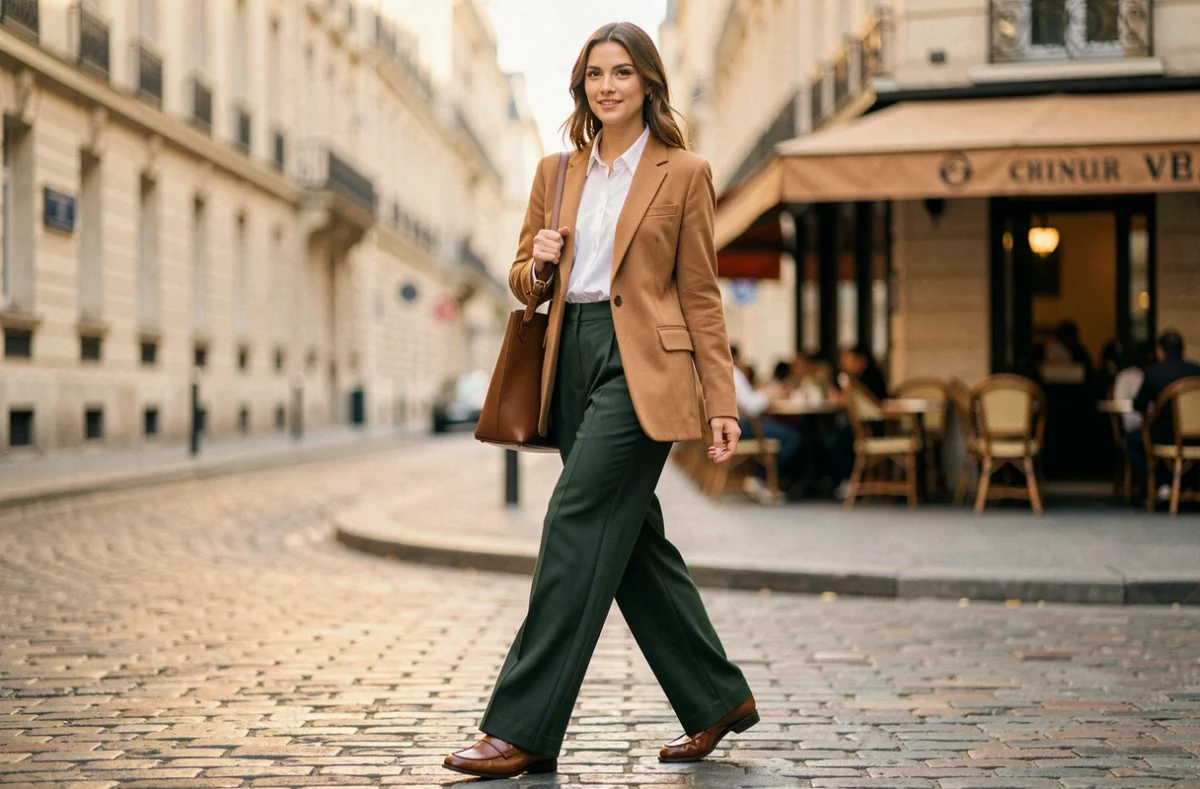
The autumn-winter 2026-2027 fashion calendar redistributes dress codes around three axes: a massive return of smooth leather as a structural piece, an earthy color palette enhanced with saturated touches, and a European regulatory framework that concretely modifies the available offerings in stores. We observe converging signals on the runways and in order books that deserve a technical reading.
Textile Regulation and Fashion Trends: What Changes for the 2026 Collections
The European ban on destroying unsold textiles, which comes into effect for large companies on July 19, 2026, reconfigures end-of-line products. Brands must now direct their stocks towards donation, repair, refurbishment, or documented recycling. This framework pushes artistic directors to tighten their ranges and produce pieces designed to last multiple seasons.
In France, the anti-fast fashion law adds an additional layer. It provides for a modulation of REP contributions based on the durability of clothing, as well as obligations to inform about the place of manufacture and the environmental impact of delivery. For consumers, this translates into more detailed labels and prices that better reflect the actual cost of production.
A direct consequence on trends: the autumn-winter collections favor robust materials (full-grain leather, merino wool, heavy denim) and timeless cuts. Fast-fashion disposable pieces are losing ground to a wardrobe designed for multiple seasons. We find on Mimi La Cocotte’s fashion category selections that illustrate this shift towards durable and stylish pieces.

Key Colors and Prints for Autumn-Winter 2026
The dominant palette revolves around deep browns, olive khaki, and dark burgundy. These earthy tones are not new, but their treatment is changing. Satin finishes replace matte textures on blouses and midi skirts, giving autumn colors a more dressed-up dimension.
Intense red emerges as the signature color of the season. Seen on spring-summer runways in bright versions, it migrates to winter in darker shades, between garnet and carmine. In a total look or as a standalone piece worn with black, it structures a silhouette without additional accessories.
Prints to Watch This Season
- The leopard print returns in a discreet format, printed on accessories or linings rather than all-over. It works as an accent rather than a central theme.
- Asymmetrical stripes replace classic sailor stripes. The widths vary on the same garment, creating a graphic effect that breaks with the usual regularity.
- Winter floral prints, on dark backgrounds with precise botanical patterns, gain ground on blouses and long dresses. They are worn under a structured jacket to avoid a country style.
Key Silhouettes and Cuts: Structured Oversized and Controlled Volumes
Oversized no longer simply means “too big.” The technical distinction between oversized and loose fit becomes a real choice criterion. Structured oversized retains anchor points (defined shoulders, clean hem, defined collar) while loose fit works with the drape without fixed reference points. Both coexist this season, but it is the structured oversized that dominates the autumn wardrobe.
Aviator-inspired jackets are the standout piece of the season. Worn in smooth leather or suede, they replace the biker jacket as the mid-season jacket. Their short and fitted cut at the waist creates an effective contrast with wide trousers or barrel jeans.
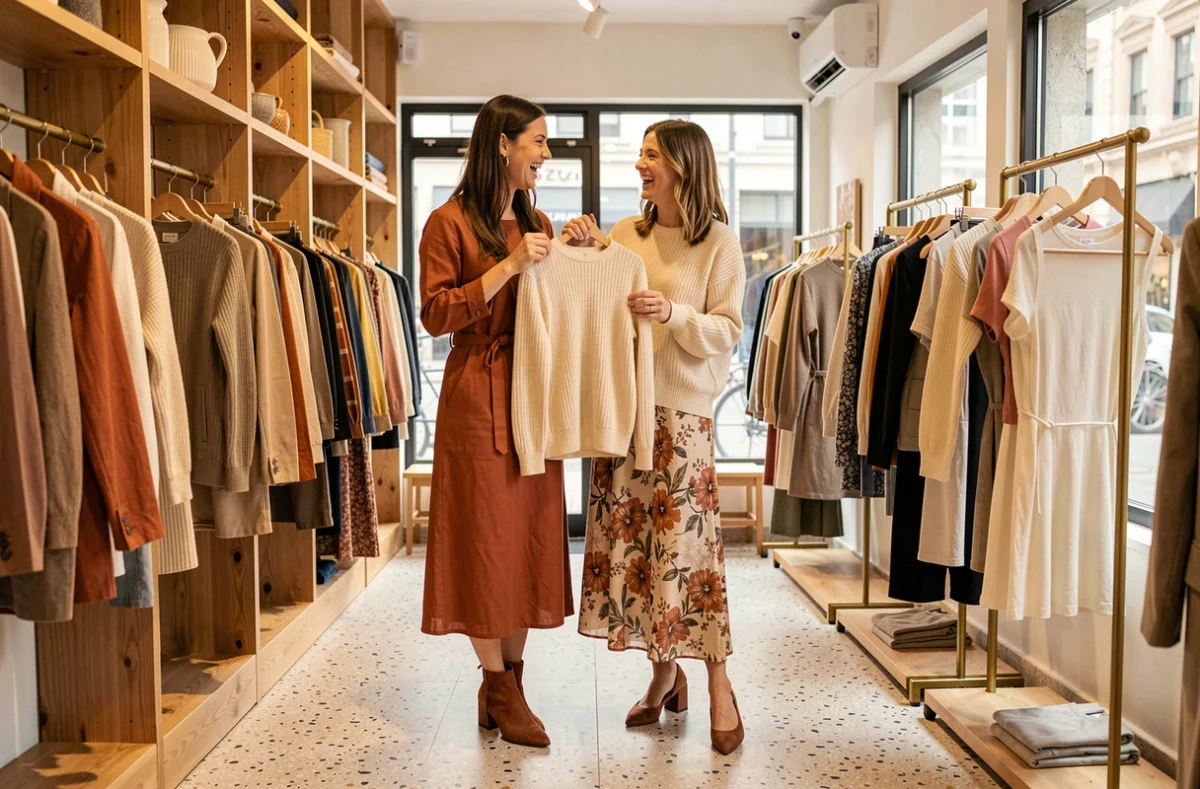
The Barrel Jean as a Key Piece
This loose fit at the thighs and tapered at the ankle has been established for several seasons, but this year it reaches a level of stylistic maturity. The barrel jean replaces the slim as the default cut in both women’s and men’s wardrobes. In raw or light-washed denim, it can be worn with both open-toe flats and chunky-sole ankle boots.
We recommend pairing it with a fitted top to balance the proportions. A tucked-in merino turtleneck into the high waist of the barrel creates a clean line that avoids a sloppy look.
Second-Hand and Circular Fashion: A Style Built Differently
Second-hand goes beyond mere resale between individuals. Integrated services for repair, buyback, and authentication transform the second-hand shopping experience into one comparable to new. This evolution changes how trends spread: a well-chosen vintage piece can become the focal point of a current outfit.
Mixing new pieces with second-hand items becomes a stylistic reflex, not just an ecological gesture. A military coat thrifted from a vintage shop can be worn with pants from the current season. This mix of temporal registers produces more personal silhouettes than a total look from a single brand.
- Prioritize pieces made from noble materials (leather, wool, silk) whose quality can be visually and tangibly verified, even after several years of use.
- Check seams, closures, and linings before purchase: these are the first indicators of remaining durability.
- Invest in tailoring: a fitted hem or a taken-in waist transforms a second-hand find into a custom piece.
The autumn-winter 2026 fashion trends are read through a dual prism: stylistic codes that value durable materials and structured cuts, and a regulatory context that accelerates this orientation. Leather, heavy denim, and deep colors form the foundation of a wardrobe designed to last more than one season.