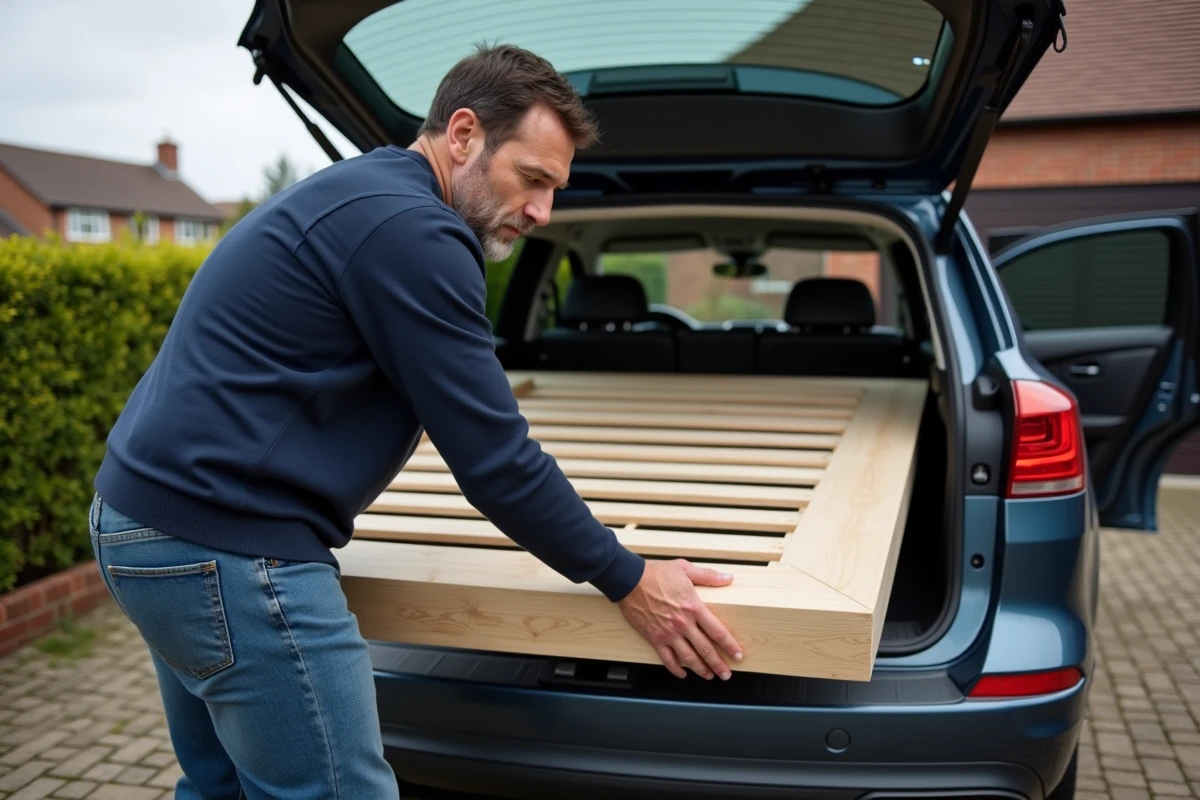
A poorly traveling bed base is a silent risk on the road and a nightmare for your back upon arrival. French regulations do not require anything specific regarding permits, but every turn and every brake can turn your bed into a projectile if you neglect to secure it. A bed base damaged by careless transport will lose its comfort, even after just a few kilometers.
Improvising with straps that are too thin or recovered ropes exposes you to much more than just a simple snag: the load can slip, fall onto the roadway, or simply become unusable. Some insurance companies are uncompromising and will refuse any coverage if the item was poorly secured. However, a few precautions are enough to avoid accidents and preserve your bedding.
What are the main challenges when transporting a bed base or mattress in a car?
Transporting a bed base in a car is a mission in itself, even for those used to moving. The size of bed bases immediately poses a problem in relation to the available space in standard vehicles. A king-size model, for example, will never fit effortlessly into a standard cabin. Sometimes, only the roof of the car remains a viable option, but this solution comes with its own set of constraints, responsibilities, and vigilance.
The security of the fastening then becomes a priority. On the road, a poorly attached bed base can detach, deform, or become a danger to you and others. The straps must be strong enough to withstand unexpected accelerations and braking, and the load must not exceed the width of the car or obscure your headlights or license plate, in accordance with the highway code.
Another often underestimated issue is the preservation of the mattress during transport. A natural latex mattress does not handle folds and rough handling well. A journey in the rain, a poorly closed cover, and you risk a bedding set that will lose comfort, or even longevity. For each stage of transport, you must anticipate: choose an appropriate vehicle, monitor the weather, and plan for parking access.
Ultimately, transporting a bed base in a car requires method and focus. The slightest mistake, whether intentional or not, can be costly, both materially and legally.
Effectively preparing bedding and the vehicle to limit risks
Before loading anything, the priority is to protect the mattress and bed base with a suitable protective cover. This action prevents dust, moisture, or scratches during the journey. Waterproof covers are incredibly effective against rain, especially during a move in France, where the weather can sometimes surprise you. A well-placed adhesive tape secures the closure, preventing any accidental opening during handling.
Also prepare the vehicle: clear as much available space as possible, fold down the back seats, and remove unnecessary items. If you opt for transport on the roof, check for the presence of approved crossbars, which are essential for securely fastening a roof-mounted bed base in full compliance. Ratchet straps or strong ropes will ensure a reliable fastening. Be sure to distribute the load and tighten the straps without excess, to avoid damaging the structure of the natural latex mattress.
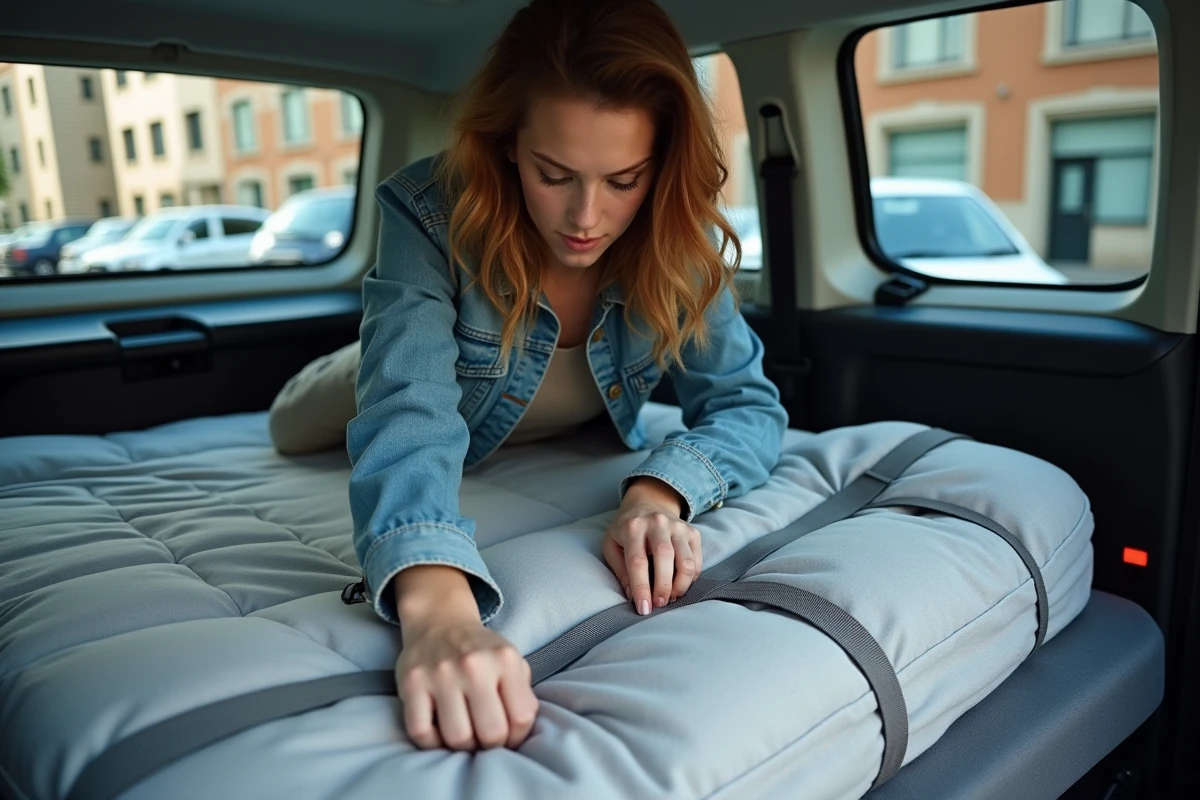
Inside the vehicle, lay the mattress flat if space allows, to avoid any deformation of the foam or latex. If space is tight, position it vertically, sliding protections between the bedding and the walls to limit impacts. The bed linen and pillows should be placed in separate bags to prevent them from being unnecessarily crushed. Careful preparation ensures a peaceful transport and a hassle-free setup in your new home.
Practical tips for a smooth journey and well-protected bedding
Stabilize, secure, breathe
Transporting a bed base and mattress in a car requires method and attention. Avoid any unexpected movement during the journey: secure the bedding firmly. Use strong straps to hold the bed base or mattress against the folded seats or the walls of the trunk. Ratchet straps remain the best option for proper tension without damaging the mattress during transport. To cushion shocks, slide folded blankets or cushions between the bedding and the walls to preserve the natural latex.
Here are the points to check to ensure the stability of the transport:
- Check the stability of the load at every stop.
- Ensure that visibility in the central rearview mirror remains good: a poorly positioned bed base can obstruct the view and hinder driving.
- Adopt smooth driving, maintain a moderate speed, and anticipate every braking or change of direction.
For a king size queen mattress or a particularly large bed base, transporting it on the roof-mounted bed base requires extra attention. Wind resistance, the height of certain bridges, or low branches can turn the journey into an obstacle course. A sturdy protective cover will limit wear due to friction and weather conditions.
Keeping a roadside assistance kit (spare straps, adhesive tape, extra blanket) handy can be lifesaving in case of unforeseen circumstances. By following these tips for moving a bed or mattress in a car, you will arrive at your destination with bedding that has lost none of its comfort: ready to be used again, without creases.