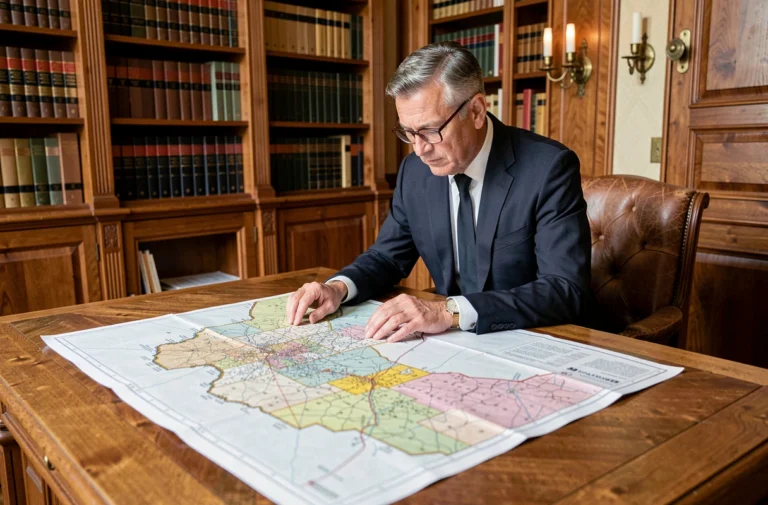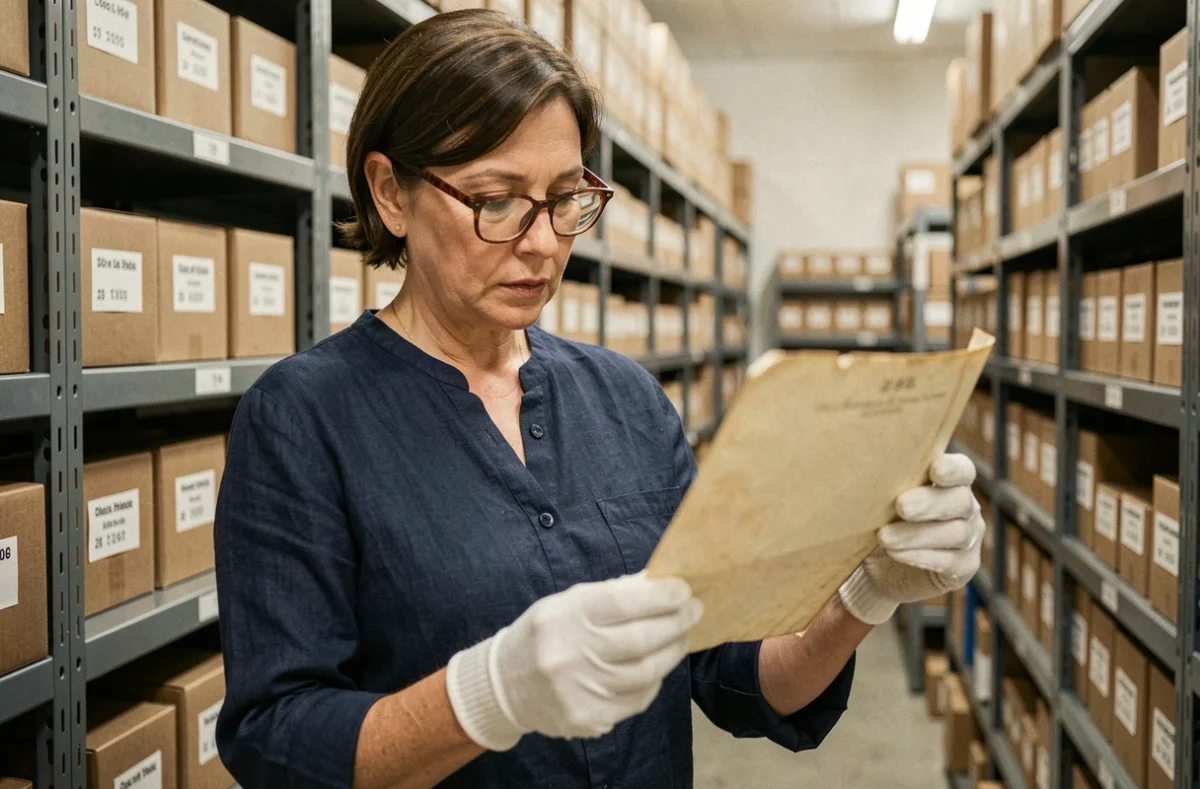
When you search for an old birth certificate, an administrative document, or a digitized family photo, you are engaging in archival work without necessarily realizing it. This profession, often associated with dusty old boxes, has changed profoundly in recent years. Archivists no longer just classify and preserve documents. They are redefining how we access information and how collective memory is constructed.
Artificial Intelligence and Archives: What is Changing in Document Processing
Have you ever tried to decipher a handwritten letter from the 19th century? Most people give up after a few lines. This is precisely the type of task where artificial intelligence comes into play in archival services.
Projects like Himanis, Lectaurep, Ner4Archives, or Simara utilize handwriting recognition and named entity extraction. In practice, an algorithm scans thousands of handwritten pages, proposes a transcription, identifies names of places or people, and then indexes everything. What used to take months of human work can now be processed in a few weeks.
The archivist does not disappear; their role shifts to validation and oversight. They check that the machine has not confused a proper name, document the treatments applied, and identify any potential biases in the results. This supervisory work requires new skills, at the intersection of document management and data governance.
To better understand the various facets of this evolving profession, a useful resource is: https://www.lesarchivistes.net/, which presents current practices and challenges in the field.

Data Governance: The Archivist at the Beginning of the Information Chain
Archivists are often imagined as intervening at the end of the chain, when a document is no longer useful on a daily basis. This image is outdated. Archivists now intervene right from the creation of data, alongside lawyers, IT specialists, and personal data protection officers.
Why this change? Because the volume of digital documents produced every day makes it impossible to sort through them afterward. It is essential to define from the outset which data to keep, for how long, in what format, and who can access it.
Records Management and the Lifecycle of Electronic Documents
Records management refers to the management of documents throughout their life, from creation to destruction or permanent archiving. The archivist brings their expertise in retention periods, traceability, and confidentiality.
This approach is particularly evident in open science initiatives. Researchers who share their data must document its provenance, collection conditions, and format. Without this documentation, data loses its scientific value. The archivist thus becomes a key player in the reliability of research.
European Regulation on AI: A New Responsibility for Archivists
The European regulation on artificial intelligence introduces traceability requirements that directly concern archives. For an automated decision to be explainable over time, it is necessary to retain:
- The datasets used to train the AI model, along with their provenance documentation
- The successive versions of the models, their parameters, and updates
- The results produced and the human corrections made
Archiving AI systems themselves becomes a regulatory obligation, not just a best practice. This responsibility far exceeds the preservation of paper documents or office files. It requires understanding the technical functioning of systems to know what to retain and how to ensure the readability of these archives in ten or twenty years.
Shortage of Digital Skills in Archival Services
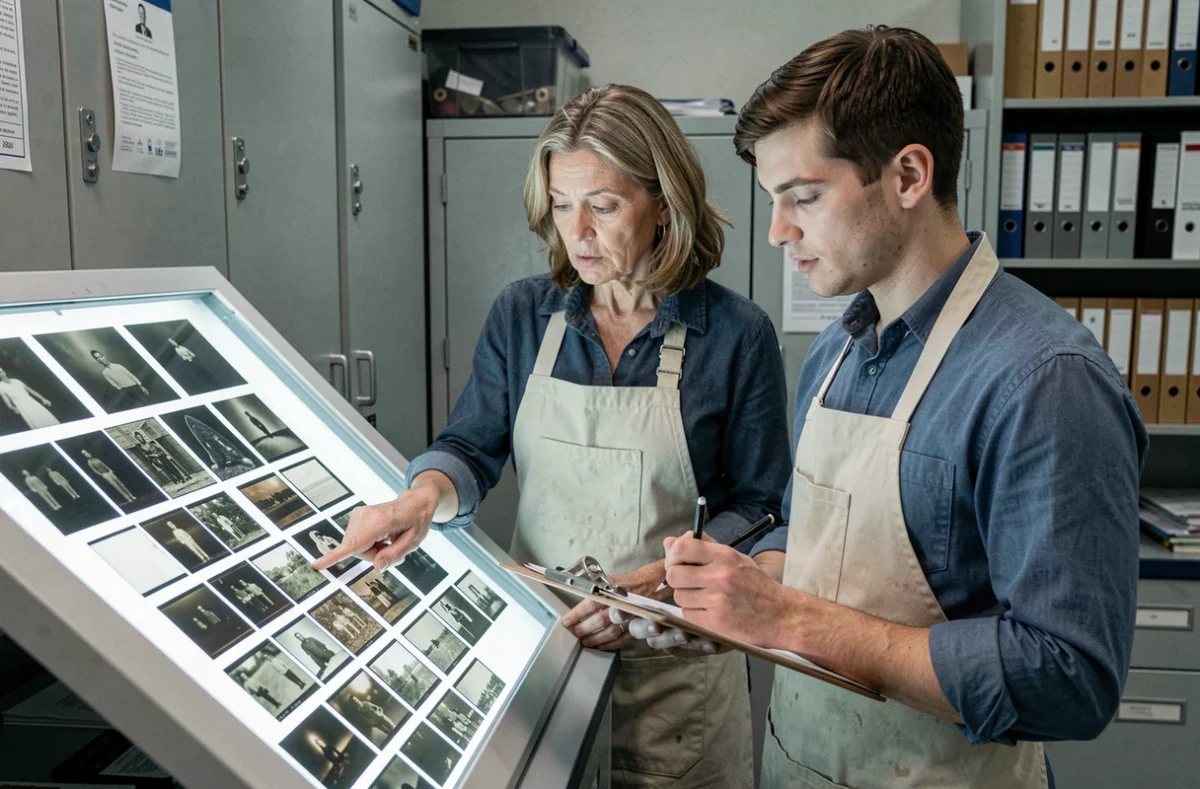
This transformation faces a concrete obstacle. The skills shortage hinders the adoption of digital tools in many archival services. Training an archivist in database management, algorithm supervision, or the legal framework of digital technology takes time and resources.
Initial training programs are evolving, but the gap between field needs and available profiles remains significant. A departmental or municipal archival service does not have the same resources as a large national institution to recruit hybrid profiles.
What This Means for the Public
For users, the consequence is direct. A digitized but poorly indexed collection remains unfindable. A poorly structured online archive portal discourages research. The quality of access to memory depends on investment in archival skills.
In practice, when a service has staff trained in digital skills, the results are visible:
- More precise online research tools, with filters by period, location, or document type
- Photographic and sound collections made accessible through automatic transcription and standardized description
- Contextualization of documents that allows the public to understand what they are consulting, not just to download it
The archivist who masters these tools transforms a stock of files into consultable heritage. Without this mediation, digitization alone does not produce organized memory.
The archivist’s profession has changed in scope without changing its purpose. Organizing information so that it remains reliable, accessible, and understandable over time remains the guiding principle. What differs is the scale, the technicality, and the role these professionals occupy in the governance of information, well before documents reach an archive repository.